
Trees on Oahu never really stop growing. With warm weather all year, steady trade winds and the occasional tropical storm, a tree that’s left alone can turn into a problem fast: heavy limbs over the roof, dead branches waiting for the next big wind, or a canopy so thick nothing grows underneath. Regular pruning keeps trees healthy, safe and good looking. Here’s what it does, when to do it and what to avoid.
Pruning vs. trimming
Most people use the two words for the same job, and that’s fine. Strictly speaking, pruning means selectively removing specific branches for the tree’s health and structure, while trimming usually means cutting back growth for shape and clearance. A good job does both. Every cut has a reason, and the tree keeps its natural form.
Why regular pruning matters
Healthier trees
Removing dead, diseased or pest-infested branches keeps problems from spreading to the rest of the tree, or to the trees next to it, and lets the tree put its energy into healthy growth. Thinning a dense canopy also lets in light and air. That matters in Hawaii’s humid climate, where crowded, damp canopies are where fungal problems get started.
A safer property
Weak, dead and overextended limbs are the ones that break in high winds. Taking them out ahead of time protects people, cars, roofs and power lines. Pruning also keeps branches off the house and raises low limbs so they clear driveways, walkways and parking. Branches near power lines are a job for a trained crew, never a ladder and a hand saw.
Stronger structure
Pruning a tree while it’s young pays off for decades. Removing competing branches and keeping one dominant main stem gives the tree a balanced, sturdy framework that is less likely to split.
Better fruit
For mango, lychee, avocado and other fruit trees, opening up the canopy lets sunlight reach the inside of the tree, and clearing out old, unproductive wood sends more of the tree’s energy into fruit.
Looks and property value
A well-pruned tree looks cleaner and lets its natural shape show. Well-kept trees add curb appeal and value, whether you own a home or manage an association or commercial property. Healthy trees also give more back to the neighborhood in shade, cleaner air and habitat for birds.

Signs your tree needs attention
- Dead, broken or diseased branches
- Limbs growing over the roof, driveway or power lines
- A crowded canopy that blocks light and airflow
- Branches crossing and rubbing against each other
- Low limbs in the way of cars, walkways or views
- A mango, lychee or other fruit tree that isn’t producing like it used to
Common types of pruning
- Cleaning: removing dead, dying, diseased and broken branches.
- Thinning: selectively removing branches to open up the canopy to light and air.
- Raising: removing lower limbs to clear roofs, cars, walkways and sight lines.
- Reduction: bringing down a tree’s height or spread by cutting back to healthy side branches instead of leaving stubs.
- Restoration: rebuilding the structure of a tree that was topped, cut back too hard or broken up in a storm.
When to prune in Hawaii
There’s no real dormant season here, so most trees can be pruned any time of year. A few timing habits still help:
- Before hurricane season. The Central Pacific hurricane season runs June through November. Getting weak and overhanging limbs out before then is one of the easiest ways to reduce storm damage.
- Fruit trees after harvest. Pruning soon after the fruit comes off gives the tree time to grow back before the next flowering.
- Young trees early. Light structural pruning in a tree’s first several years is much easier on it than big corrective cuts later.
- Go easy on stressed trees. A tree struggling with drought or recent damage should only have dead and hazardous wood removed until it recovers.
Pruning mistakes to avoid
- Over-pruning. Taking too much live canopy at once stresses the tree, and in our humid climate poor pruning can raise the risk of disease. A common rule of thumb is to remove no more than about a quarter of the live canopy at a time.
- Topping. Cutting the top off a tree leads to fast, weakly attached regrowth that breaks easily and often looks worse than before.
- Bad cuts. Cuts belong just outside the branch collar, the slightly swollen area where a branch meets the trunk. Flush cuts and long stubs both heal poorly.
- Dirty tools. Saws and pruners can carry disease from one tree to the next if they aren’t cleaned between trees.
We’re often called in to fix trees after a trimming job done by someone else went wrong. The right restoration pruning can sometimes save a tree that would otherwise have to come down.
When to call a professional
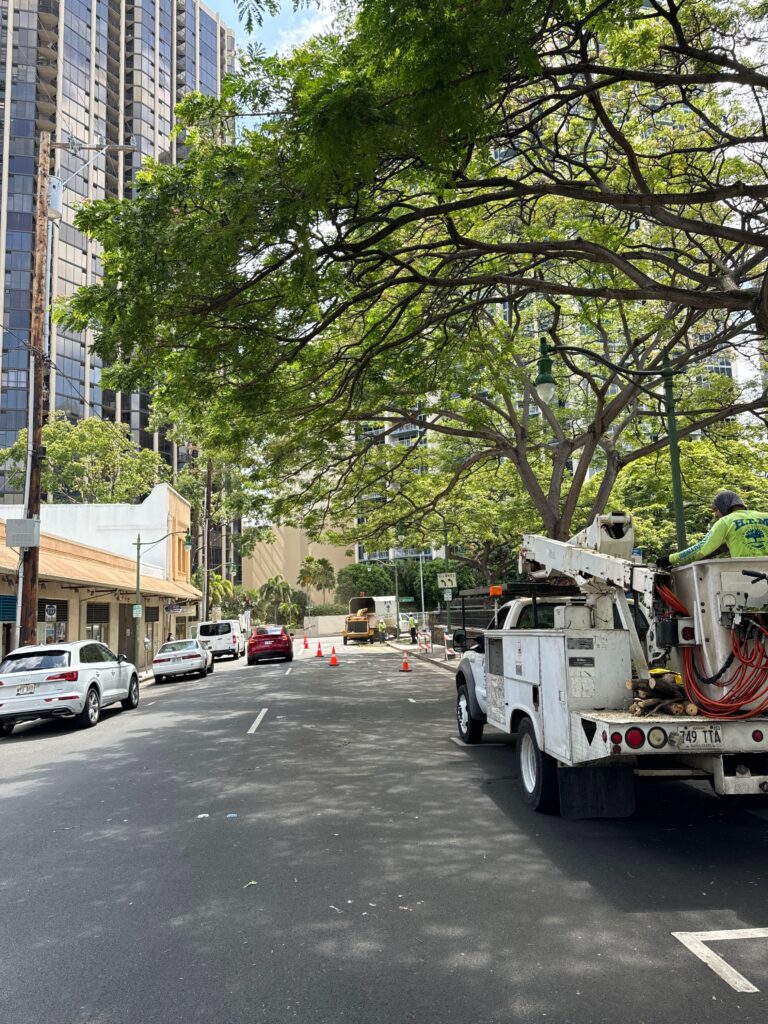
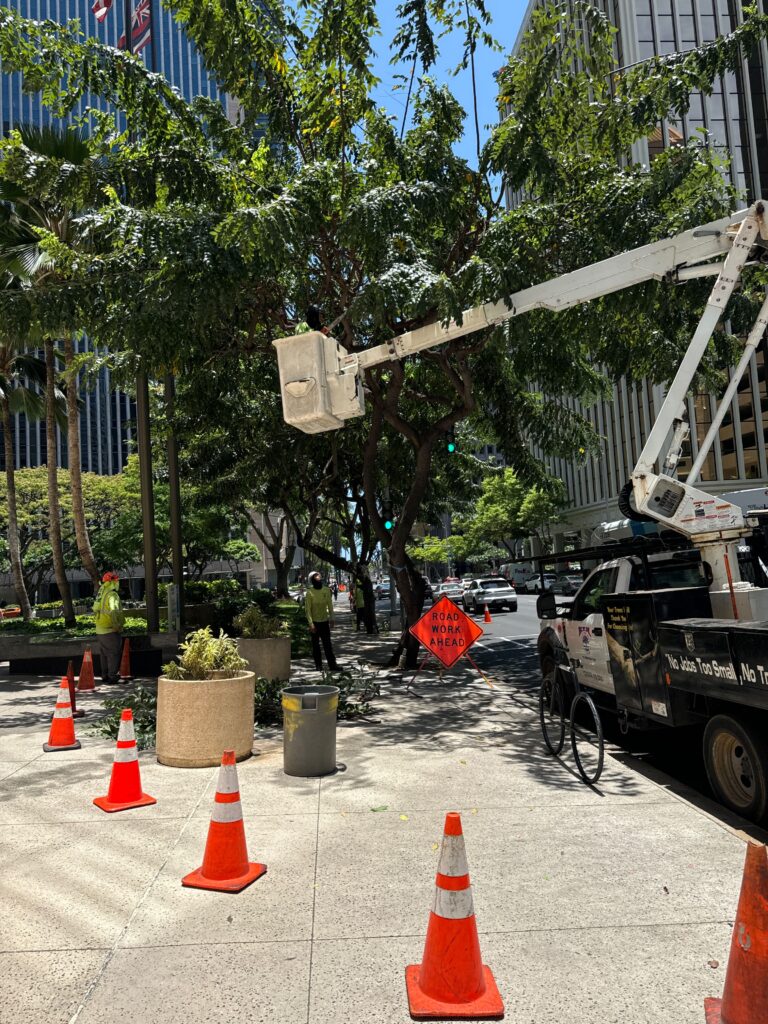
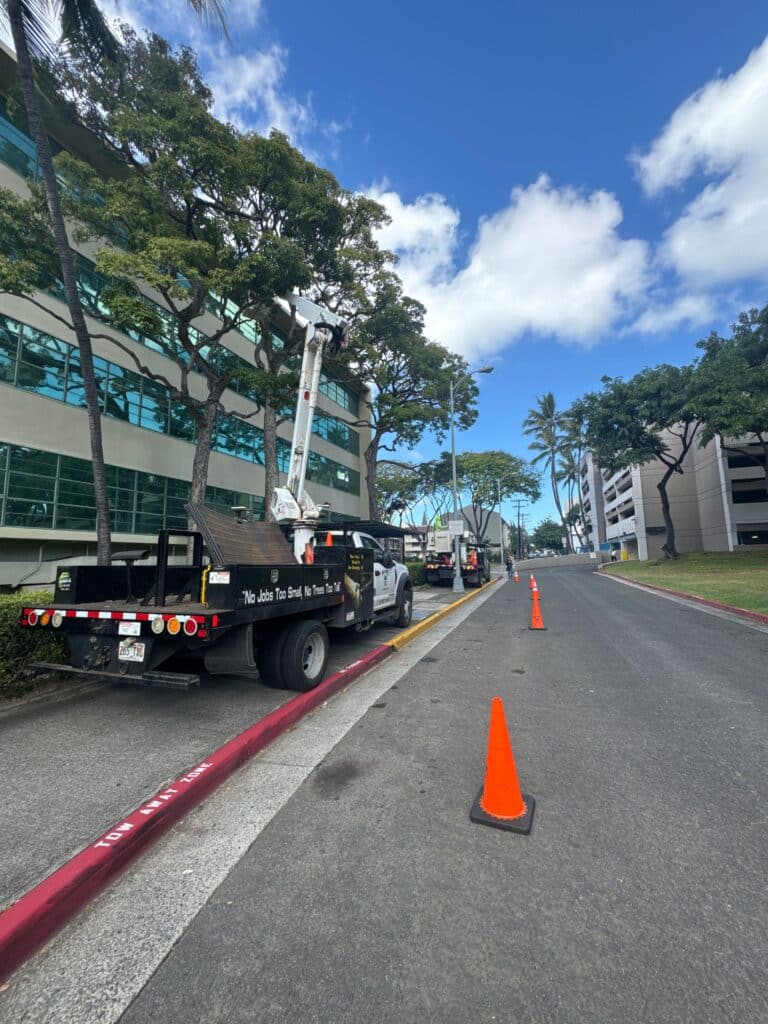
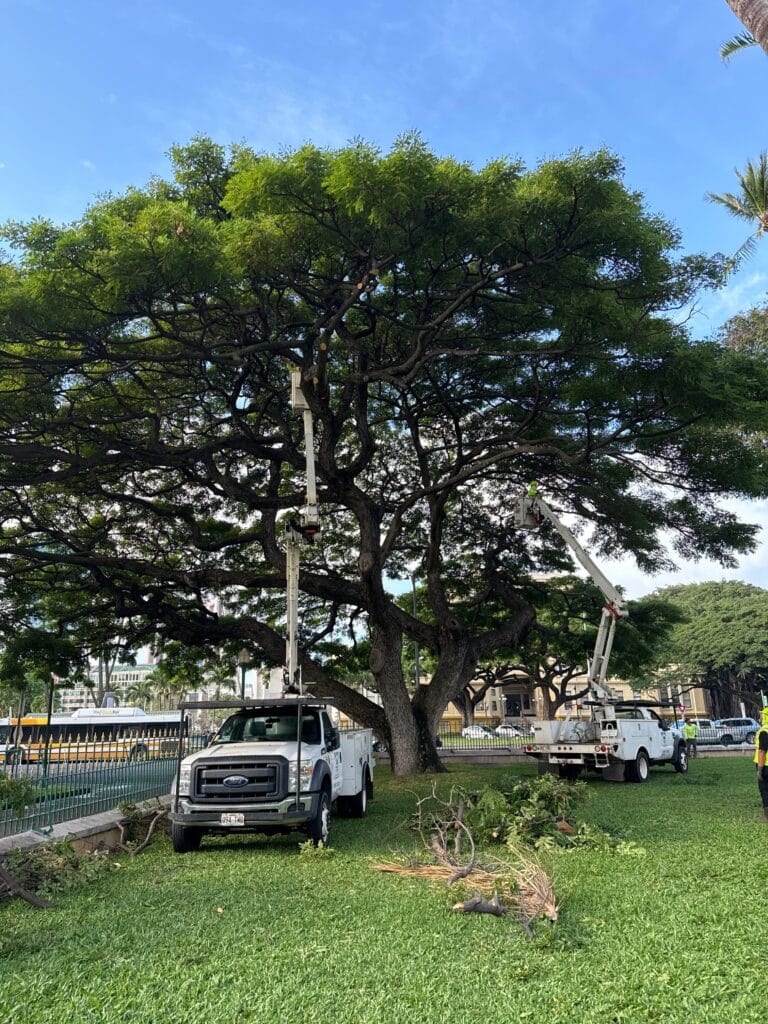
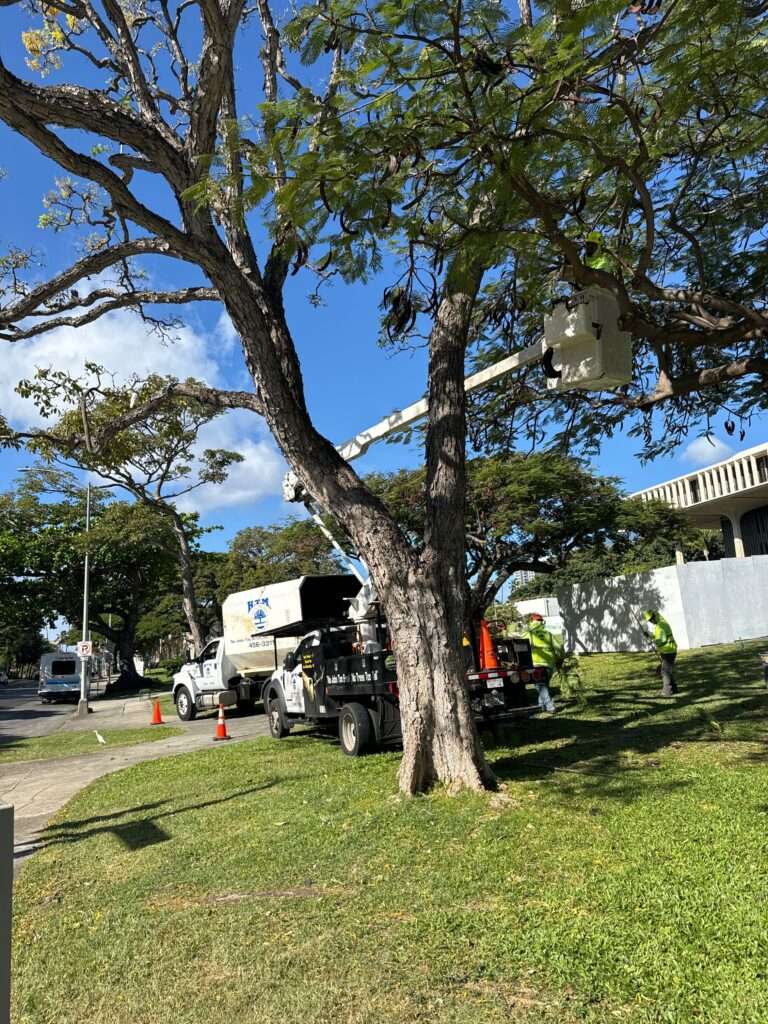
Small shrubs and low branches you can reach from the ground are fine to handle yourself. Large trees, limbs over a house or car, anything near power lines, and any job that means a ladder and a chainsaw are better left to a trained crew. An ISA Certified Arborist can look at the tree’s health and structure and decide which cuts to make, and our crews reach the canopy by climbing or with aerial lifts.
HTM Contractors has served Oahu since 1999, from single backyard trees to large jobs like crown cleaning 3,954 trees in Waipio, Waipahu and West Loch. For a free estimate on tree pruning and trimming on Oahu, call 808-456-3311.
Keep reading: Palm tree trimming tips and benefits · Getting your trees ready for hurricane season · Tree trimming in Hawaii