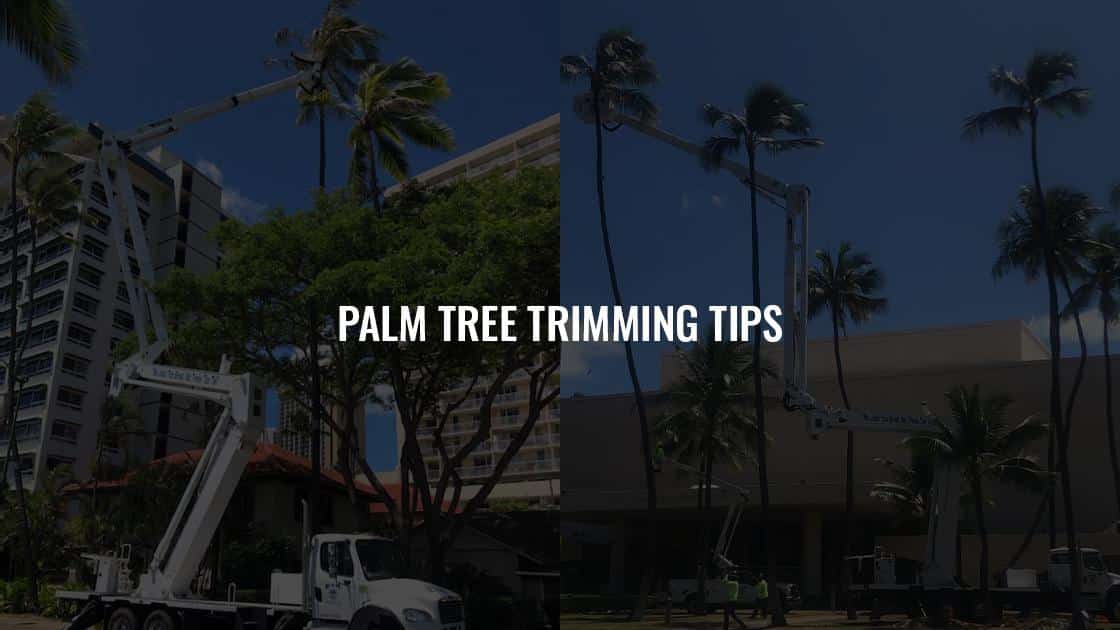
Palm trees are a big part of what makes a yard in Hawaii feel like Hawaii, and they need different care than other trees. Dead fronds and coconuts hang on until the wind brings them down, and a palm that goes untrimmed can become a home for rats and insects. Here’s why regular trimming matters, how often to do it and what a proper trim looks like.
Why trim your palms
Safety
This is the big one. Dead fronds get knocked loose in high winds and can damage property or hurt someone below, and a falling coconut is heavy enough to cause a serious injury. Palms over walkways, parking, pools and play areas need the most attention, especially at associations, hotels and businesses where the public walks underneath.
Tree health
Clearing out dead and dying fronds, old flower stalks and debris keeps the crown clean. It also makes it much easier to spot problems early, whether that’s disease, a nutrient issue or beetle damage, before they spread in Oahu’s warm, humid weather.
Pest control
A thick skirt of dead fronds is a perfect nesting spot for rats and insects, and those pests can move on to nearby plants. Trimming it out makes the palm far less inviting. Each trim is also a chance to check for Coconut Rhinoceros Beetle (CRB) damage, which shows up as V-shaped cuts in the fronds, and we can treat for CRB on the same visit.
Curb appeal
A neatly trimmed palm simply looks better. Whether it’s a home in Kailua, a resort in Waikiki or a business on the North Shore, well-kept palms make a good first impression and add to a property’s curb appeal and value.

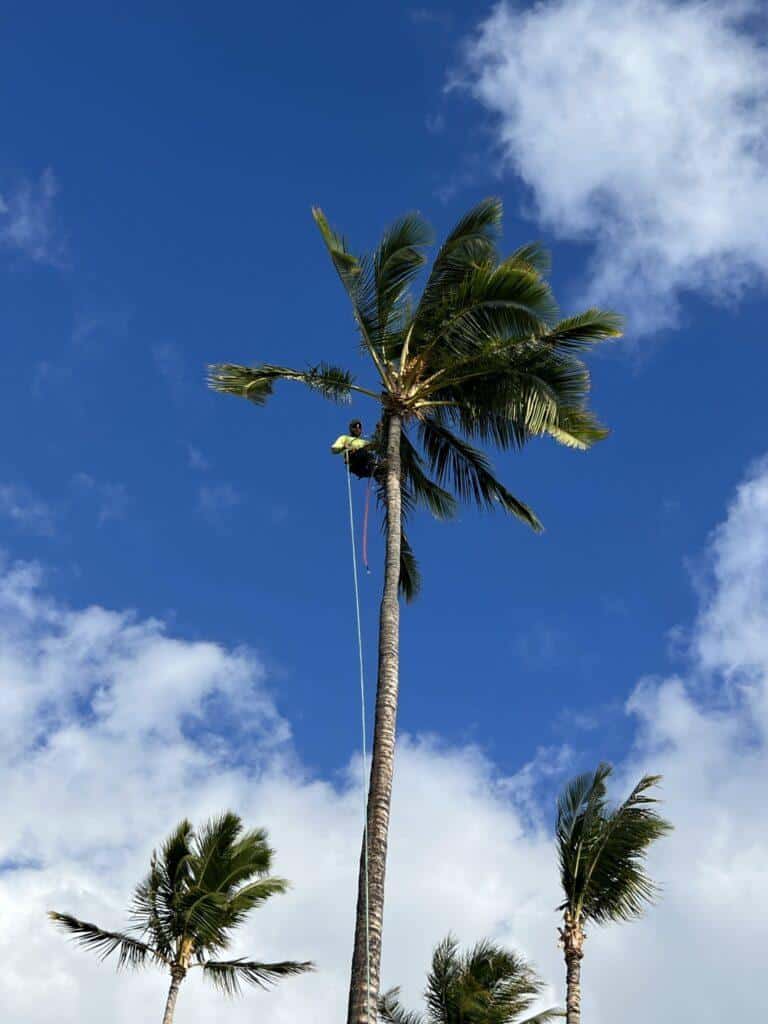
How often to trim palms in Hawaii
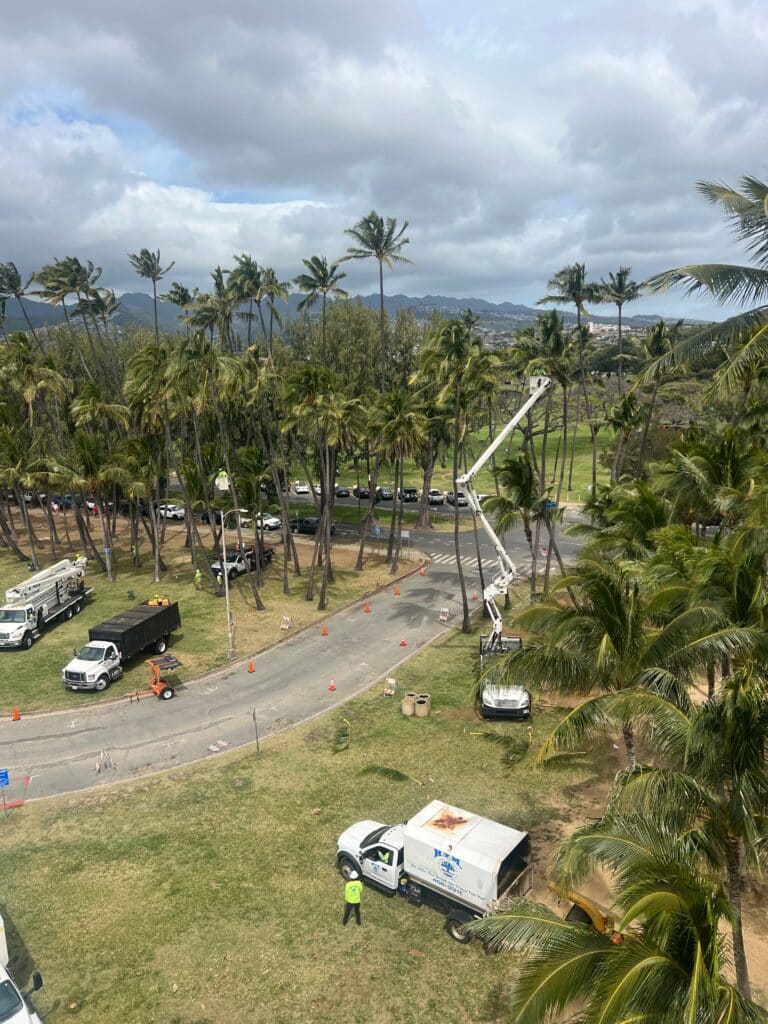
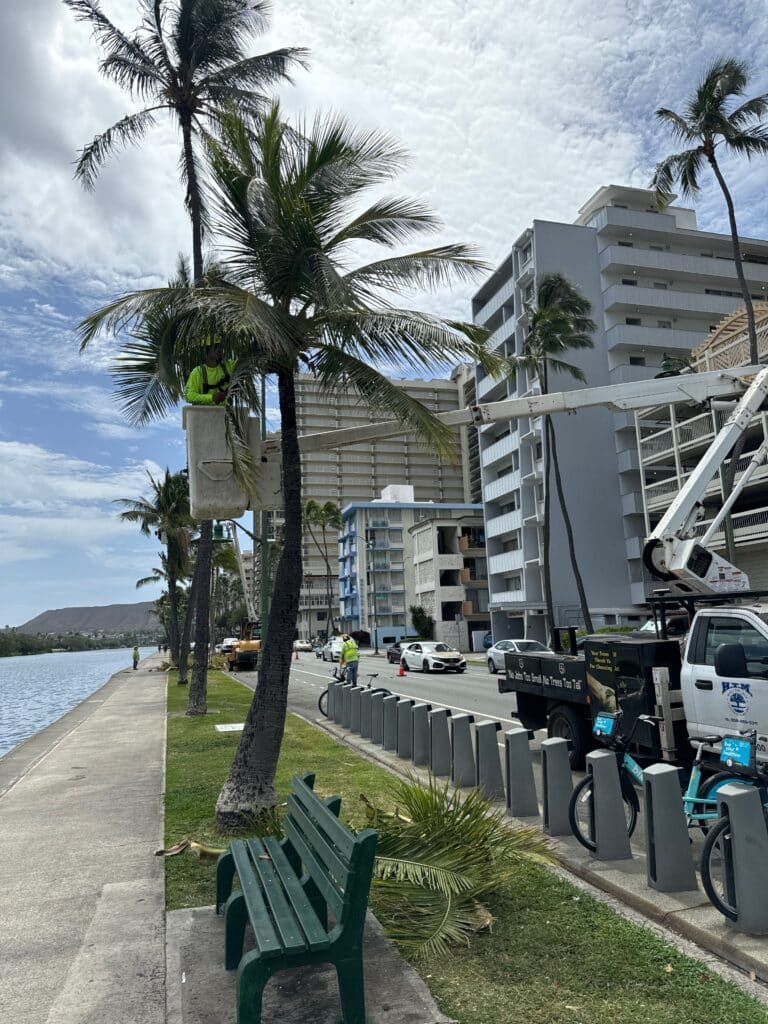
Palms here grow all year, so there’s no off season for trimming. Most coconut and royal palms on Oahu do well with a trim every 6 to 12 months. Palms over walkways, parking or pools may need it more often. It’s also smart to have palms trimmed before hurricane season, which runs June through November, so loose fronds and coconuts aren’t left up there for a storm to throw around.
What a proper trim includes
- Inspect the palm. Look over the crown and trunk for dead or broken fronds, coconuts, flower stalks and signs of pests or disease.
- Remove dead and broken fronds. Fully brown fronds go first. Cut them close to the trunk without cutting into it, because a palm trunk can’t heal wounds the way other trees do.
- Leave the healthy green fronds. Only trim green fronds that hang below horizontal. Fronds that are just partly yellow are often still feeding the palm, so a careful trimmer leaves most of them.
- Take off coconuts and flower and fruit stalks. They pull energy from the palm, and coconuts are a hazard when they fall.
- Clean up. Haul away the cut fronds and debris so they don’t become a new home for pests.
- Final check. Step back and make sure the crown is balanced and the palm still looks natural.
Don’t over-trim
Cutting off too many green fronds, sometimes called a hurricane cut, leaves a palm with a thin tuft at the top. It looks tidy for a while, but it stresses the palm and slows its recovery, and it doesn’t make the tree any safer in a storm. Our crews take what needs to go and leave the healthy crown in place.
Thinking about doing it yourself?
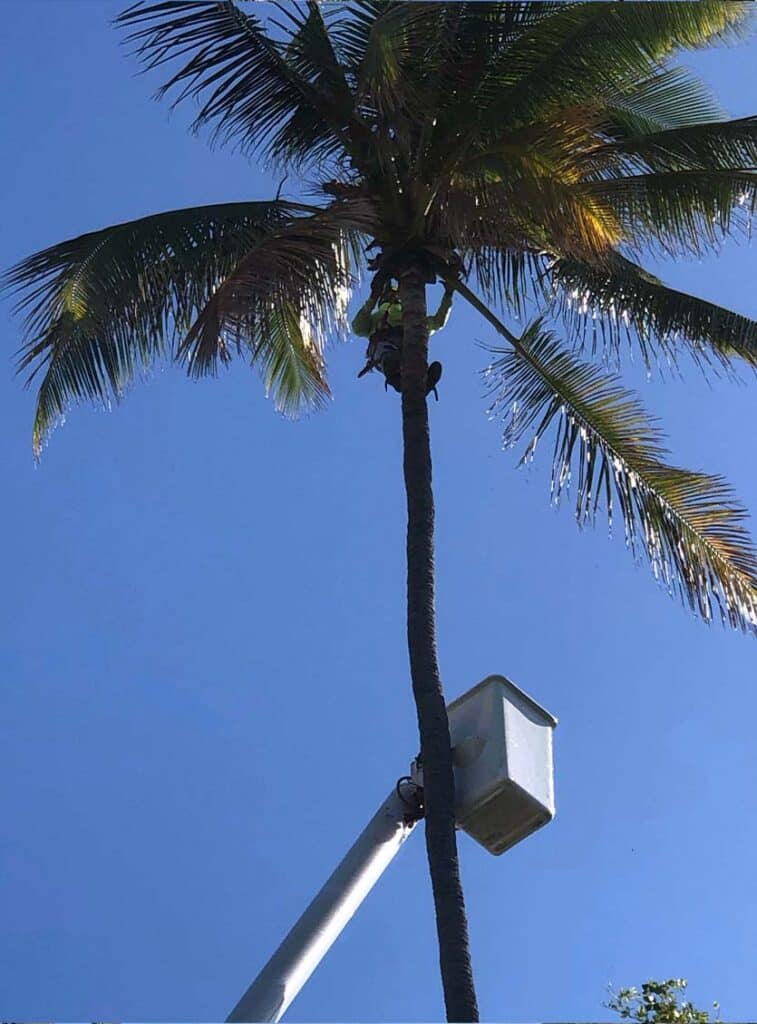
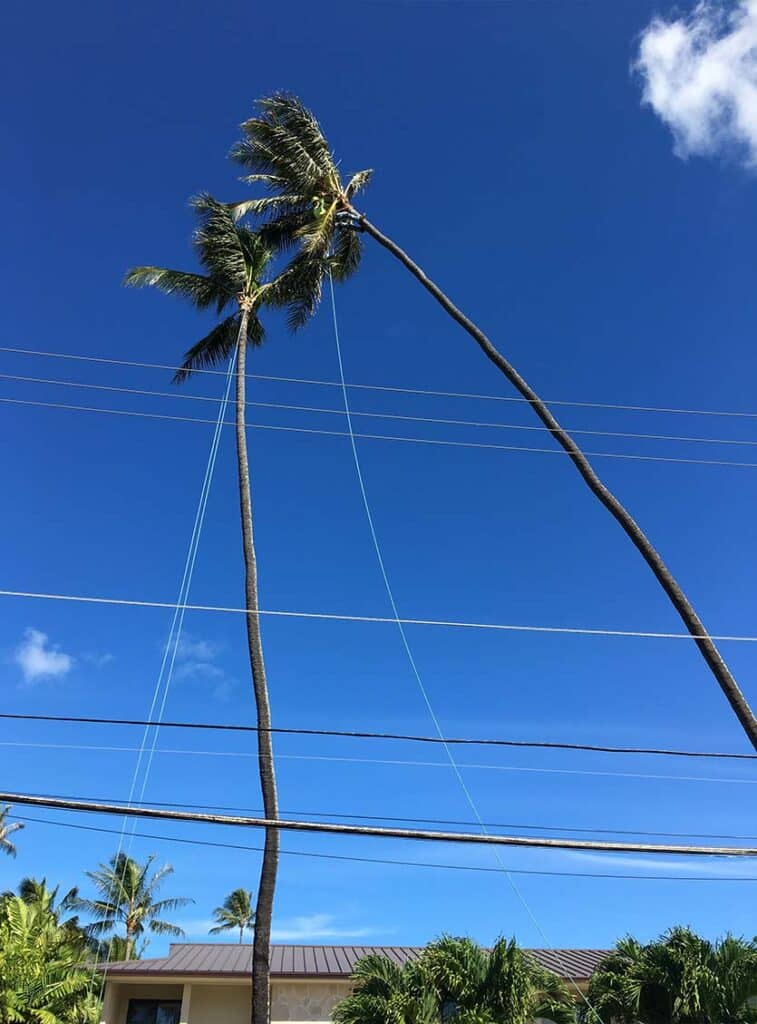
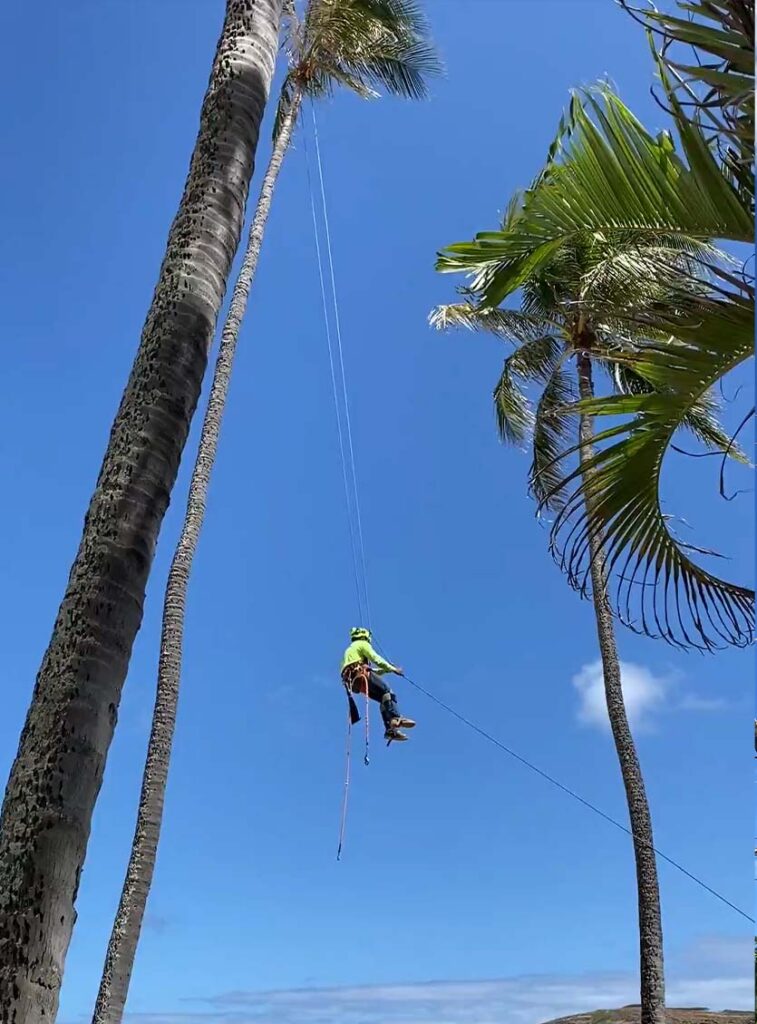
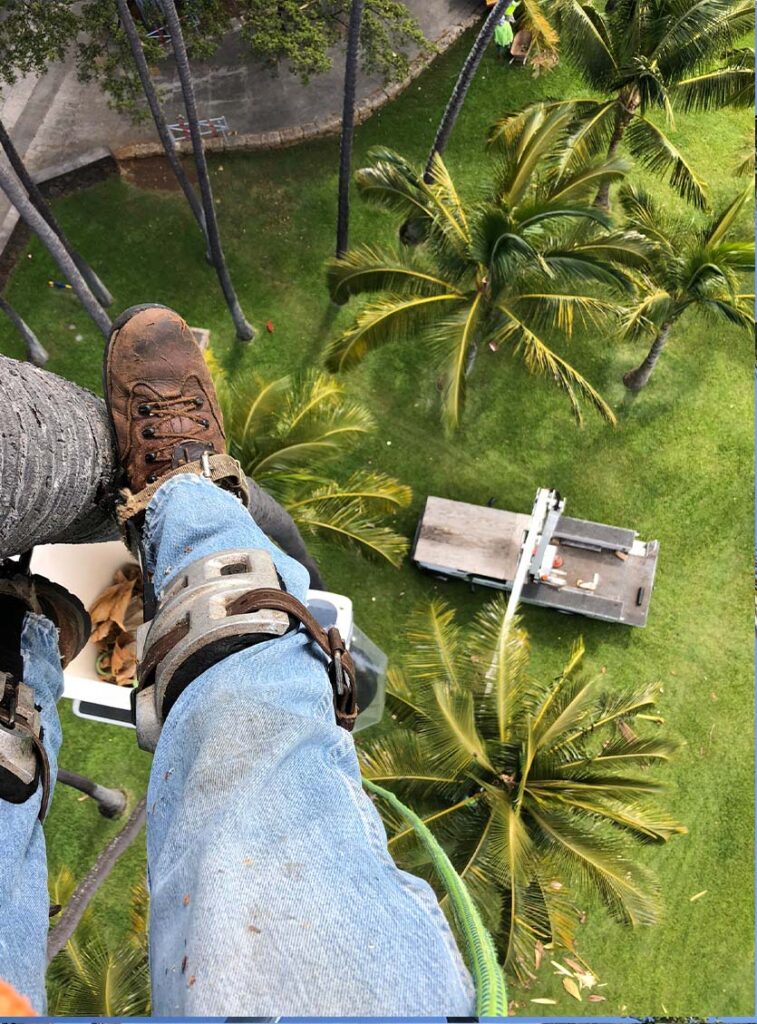
A short palm you can reach from the ground can be a DIY job with a sharp pruning saw, gloves, eye protection and a hard hat. Anything taller is a different story. Working off a ladder with a saw over your head is risky, and heavy fronds and coconuts can swing or drop in directions you don’t expect. Tall palms are a job for a crew with proper climbing gear or a lift.
After a trim, water the palm well if the weather has been dry, and if you fertilize, wait a couple of weeks.
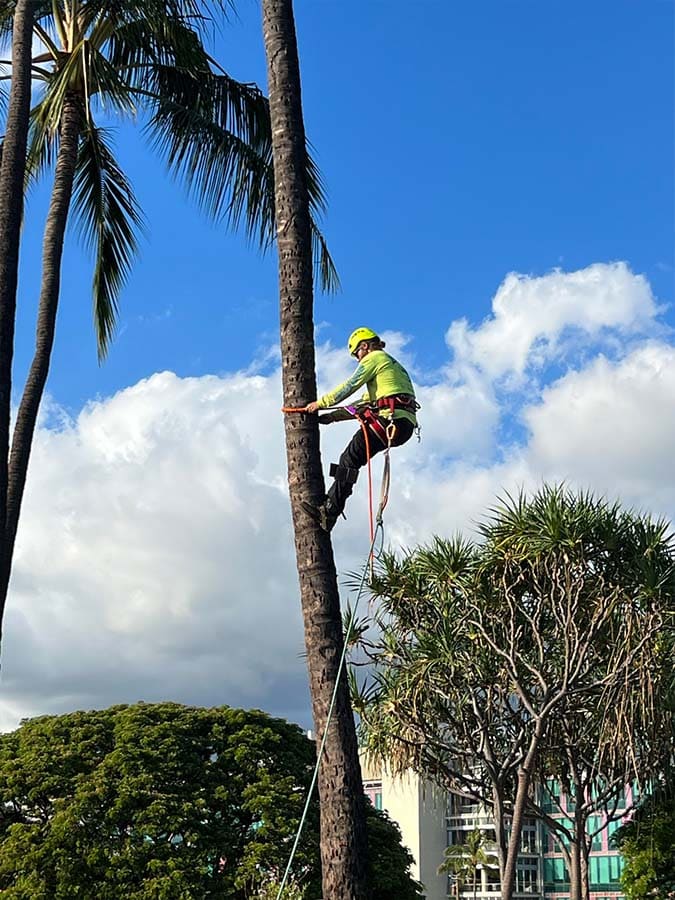
Palm tree trimming on Oahu
HTM Contractors has served Oahu since 1999. Our estimates are honest and straightforward, with no surprises or hidden fees. We put safety first for your property, your family and our crew, and we know how to care for tropical trees. For a free, no-obligation estimate on palm tree trimming on Oahu, call 808-456-3311 or send us a message.
Keep reading: V-shaped cuts on palm leaves: a sign of CRB damage · Protecting palms from CRB with vascular injections · Tree pruning in Hawaii